Zainabart.no Zainab Abdulkarim, Iraq, Oslo, Norway، Visual Art, gallery, exhibition, Zainab Art, Whispering Dialogue, زينب عبد الكريم
Oslo Files
Report by a Journalist in Norway 2026
Documented event in Oslo, Norway


Zainab Abdulkarim, Iraq, Oslo, Norway، Visual Art, gallery, exhibition, Zainab Art, Whispering Dialogue
Following these events, after the victims relocated to Oslo in 2014, the main coordinator of the 2008 migrant facilitation operations resurfaced through activities presented as “Charitable Art Exhibitions.” Documented evidenceand preserved correspondence indicate that this project was used as a cover to reestablish contact with the victims.
The individual moved from Skien to Oslo after failing to locate the victims in smaller towns. During this period, contacts were made with the Norwegian police from Italy, where callers falsely presented themselves as high-level witnesses affiliated with the Iraqi Embassy in Rome. Official records confirm that one of these callers was in fact a security guardpreviously linked to illegal activities dating back to 2008.
The coordinator eventually determined the victims’ residence and relocated nearby, initiating a phase marked by sustained surveillance, pressure, and intimidation. Verified information indicates that during this period, she stayed at the home of a Norwegian police officer living in close proximity to the victims. This officer had previously interacted with her during the initial case based on false claims, leading him to take actions outside the legal framework without full awareness of the broader situation.
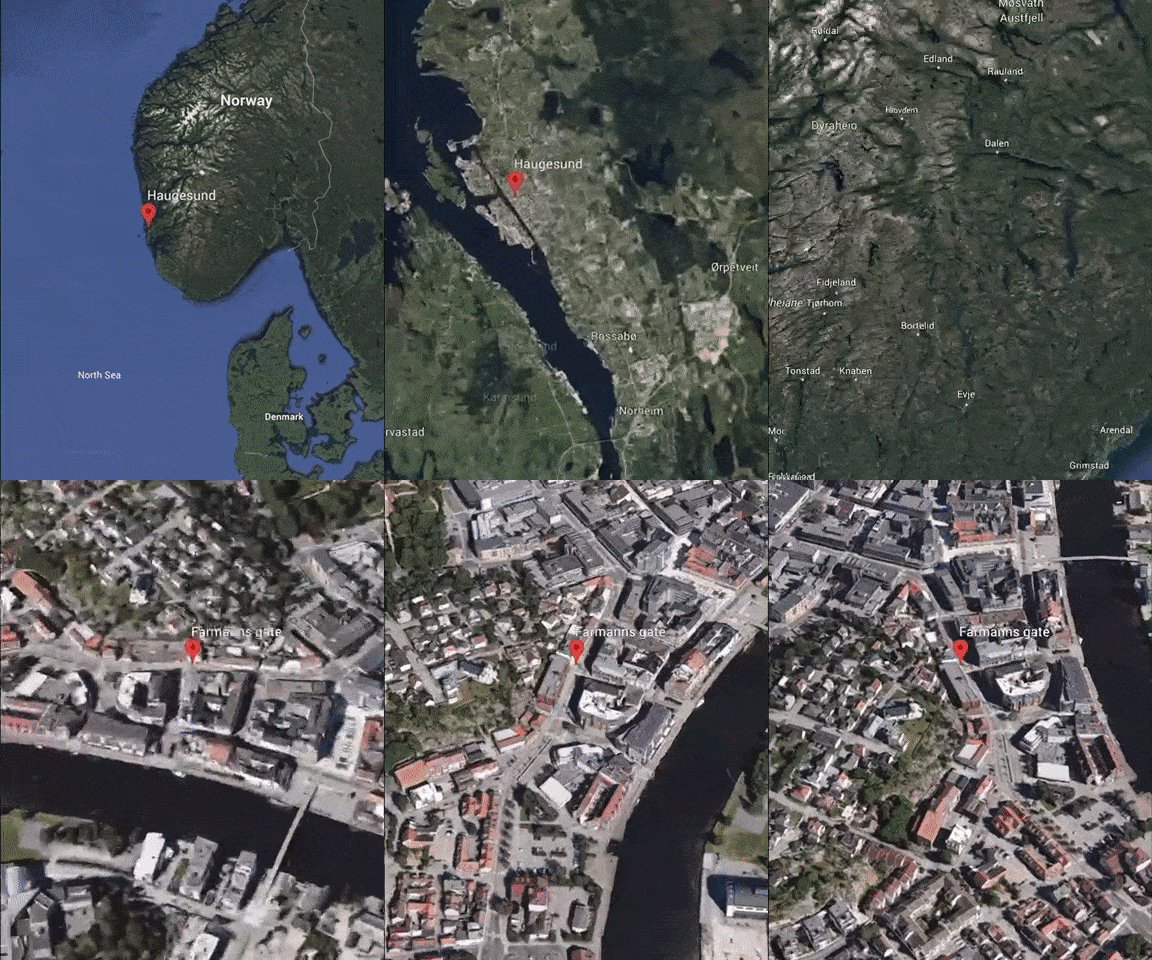
A map illustrating the Fredrikstad City Council candidate’s relocation from Haugesund,Tysvær to Fredrikstad in 2009-2010, a turning point in his activities, during which he expanded his extortion network targeting the individual smuggled from Rome in 2008, using his new location as a base to orchestrate false accusations and apply pressure that later reached Oslo.

Zainab Abdulkarim, Iraq, Oslo, Norway، Visual Art, gallery, exhibition, Zainab Art, Whispering Dialogue
In 2010, a security guard contacted the Norwegian police, falsely presenting himself as a witness acting on behalf of the coordinator involved in the 2008 migrant facilitation operations, and claiming to hold a senior position at the Iraqi Embassy in Rome. Available records indicate that this contact was intended to mislead the authorities and support a constructed narrative designed to conceal her involvement in prior facilitation activities.
During the same period, the coordinator presented herself in a hospital setting as experiencing a severe mental health crisis, a portrayal documented to coincide with her efforts to avoid detection and scrutiny regarding her previous facilitation activities.
It is further noteworthy that the guard himself had previously been forcibly deported from Norway to Italy by Norwegian authorities prior to 2008, a fact documented in official records and relevant to assessing his role and credibility in these events.
The coordinator later exploited this trust to create a misleading impression among certain police officers in Oslo, contributing to an informal protective environment influenced by perceived professional loyalty. Zainab Abdulkarim Ali
In 2022, these actions escalated when the same officer, acting outside the scope of his official duties and under deception, confronted the victims outside his residence, demanding they remove published information about the coordinator and refrain from reporting it.
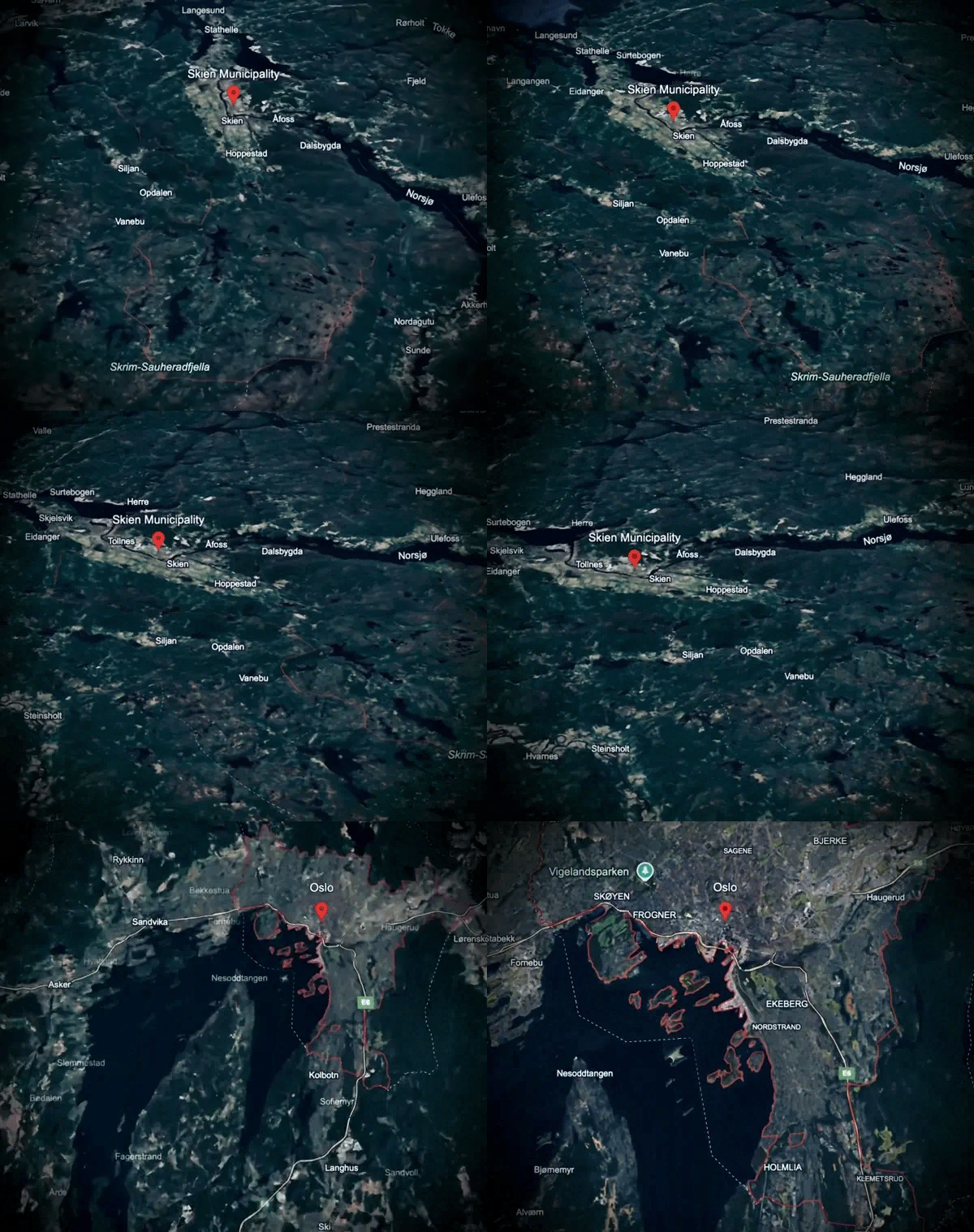
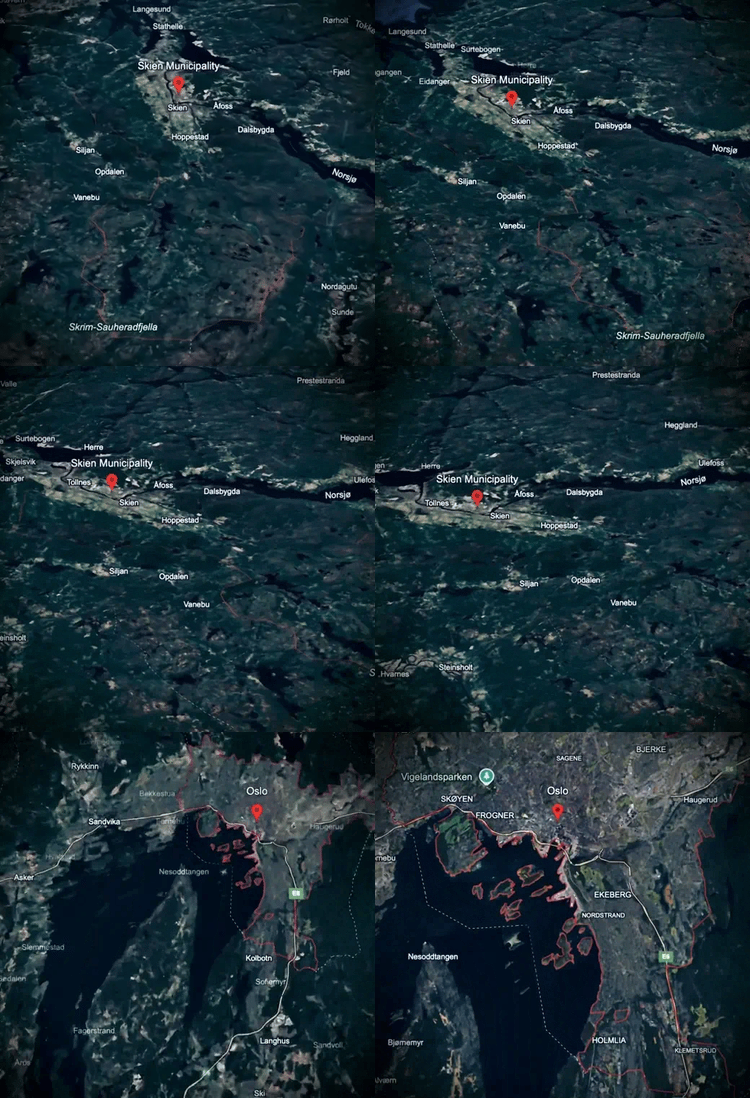
A map illustrating the movements of the coordinator involved in the 2008 migrant facilitation operations, who left the city of Skien in Norway after the candidate for the Fredrikstad municipal council failed to execute the plan there. She later decided to pursue the victims herself, relocating to Oslo, where she spent several years attempting to trace their whereabouts and maintain the pressure that had begun in Fredrikstad. Zainab Abdulkarim Ali


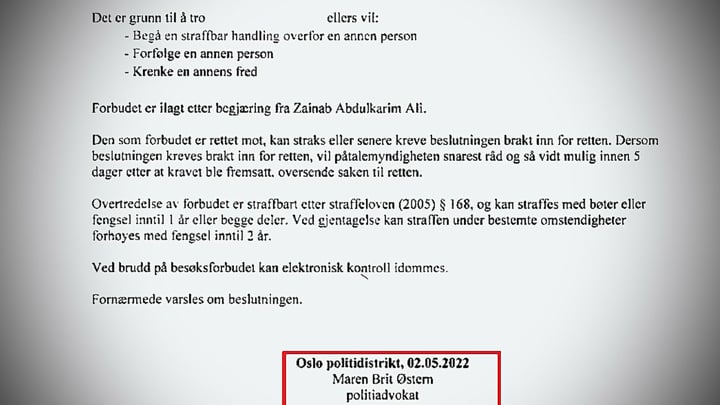
Maren Brit Østerns, MBO035, Unethical and Illegal Document, 18.05.2022
A lawyer affiliated with the Oslo Police Majorstuen precinct prepared a retaliatory document lacking the most basic ethical and professional standards, carefully drafted to undermine the victims’ credibility rather than reveal the truth.
The document relied on selective interpretations of prior incidents, including cases the police had previously mishandled and later corrected. It also drew on fragmented legal references to construct a false narrative portraying the victims as engaging in dangerous behavior without factual basis. It further employed misleading criminal and psychological characterizations to influence the court, direct judgment in favor of the coordinator and the officer, and divert attention from smuggling operations through deceptive narratives.
The document was signed without informed basis or institutional backing. It was not only submitted to the court but also handed over as a gift to a police officer and to the coordinator residing in his home, an explicit indication of a conflict of interest and abuse of authority.
In a more serious escalation, the coordinator later used the same document as a tool of systematic deception, aiming to mislead the courts and third parties aware of the evidence, persuading them of her non-involvement in smuggling, and undermining the victims’ testimonies as false claims.
Although later classified as a police procedural error, the issuance of this document by a lawyer accredited with the Oslo Police conferred a false appearance of legitimacy. In reality, the document reveals a deliberate pattern of complicity that extends beyond negligence to active participation in misleading both the judiciary and the victims, effectively turning legal instruments into tools for protecting criminal interests.
Zainab Abdulkarim, Iraq, Oslo, Norway، Visual Art, gallery, exhibition, Zainab Art, Whispering Dialogue
In 2022, the coordinator was repeatedly observed wearing a blue coat near the fence of the victims’ home in Oslo, exploiting her relationship with the police officer she was residing with. She documented the victims’ presence outside her home and falsely claimed they were stalking her, attempting to construct a misleading narrative for the authorities, a narrative later contradicted by subsequent documentation. Zainab Abdulkarim Ali
Despite this, certain Oslo police officers and their attorneys continued to engage with her, effectively safeguarding her interests while rejecting any actions that could expose her network or harm her. This conduct raises serious concerns about institutional impartiality and underscores the urgent need to separate official duties from personal interests in sensitive cases of this kind.



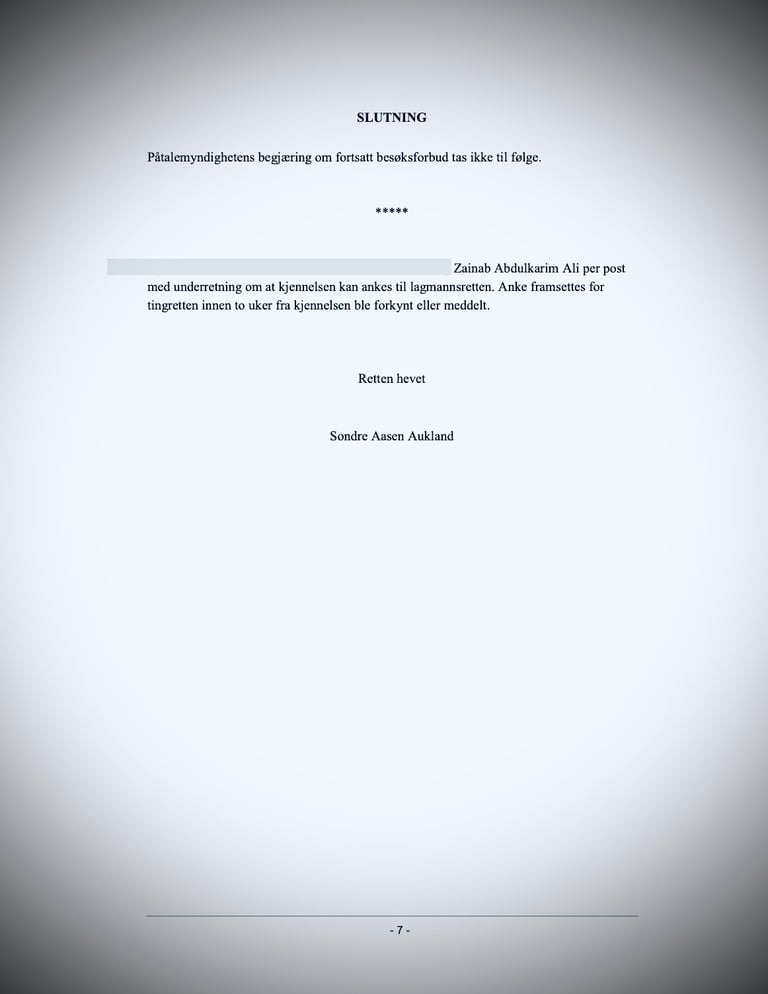
"The Oslo District Court’s decision on May 30, 2022, marked a turning point in what appears to be a broader institutional breakdown within Oslo Police. A police attorney, Maren Brit Østern (MBO035), submitted a misleading memorandum in favor of a smuggling operations coordinator, relying on testimony from a complicit officer, in a clear attempt to reframe the facts and undermine the victims’ legal standing before the court. The court rejected these claims in full, and the case record points to indications of internal collusion within parts of Oslo Police with a network that should have been dismantled rather than enabled."
Zainab Abdulkarim, Iraq, Oslo, Norway، Visual Art, gallery, exhibition, Zainab Art, Whispering Dialogue
"The document issued on May 10, 2022, reveals that an investigation was conducted into corruption involving police lawyer Maren Brit Østern, during which she was formally investigated on allegations of corruption and collusion, alongside a complicit police officer, in a frivolous case filed by the coordinator. Through this case, the police attempted to protect the coordinator and her network. Although classified as a procedural error, the document exposes clear professional bias, turning legal tools from instruments of justice into a cover for personal interests, leaving the victims as witnesses to corruption and abuse of authority. Furthermore, the results of the investigation were withheld from the public in order to preserve the reputation of the police."

Maren Brit Østern (MBO035) is a police lawyer at the Majorstuen Police Station in Oslo.
The outcome was shocking: it exposed blatant professional bias and a clear violation of Oslo Police regulations, turning the legal instrument from a means of achieving justice into a cover for protecting intertwined interests and relationships.
But the repercussions did not stop there.
Based on verified information and documented evidence, in 2022, personal data of witnesses and documents regarding cases in which the Oslo Police had previously made errors and later corrected them were leaked to the coordinator and her network at Majorstuen Police Station. This deliberate act aimed to exert pressure and defame, preventing the publication of smuggling-related information that would have revealed collusion between certain police officers and network members, following the loss of the first case in order to shield those involved.
The situation reached its peak when one official exploded in anger, using unethical language to describe the victims in front of their lawyer, shouting through the official corridors:
"What more does your client want? He already won the case…"
This was not a passing remark, but a revealing indication of an institutional mindset lacking restraint, treating the victims as a burden to be silenced rather than recognizing their right to protection and justice.
These violations later prompted the administration to take a decisive step: banning any future contact between the department and the victims, in an attempt to contain the fallout of what has come to be seen as one of the most controversial cases within the Oslo Police.
17.06.2022 A detailed report of the events was submitted to the Norwegian Bureau for the Investigation of Police Affairs, but the unit remained silent, as is often the case in similar matters, taking no action or issuing any response.

Zainab Abdulkarim, Iraq, Oslo, Norway، Visual Art, gallery, exhibition, Zainab Art, Whispering Dialogue
Zainab Abdulkarim, Iraq, Oslo, Norway، Visual Art, gallery, exhibition, Zainab Art, Whispering Dialogue
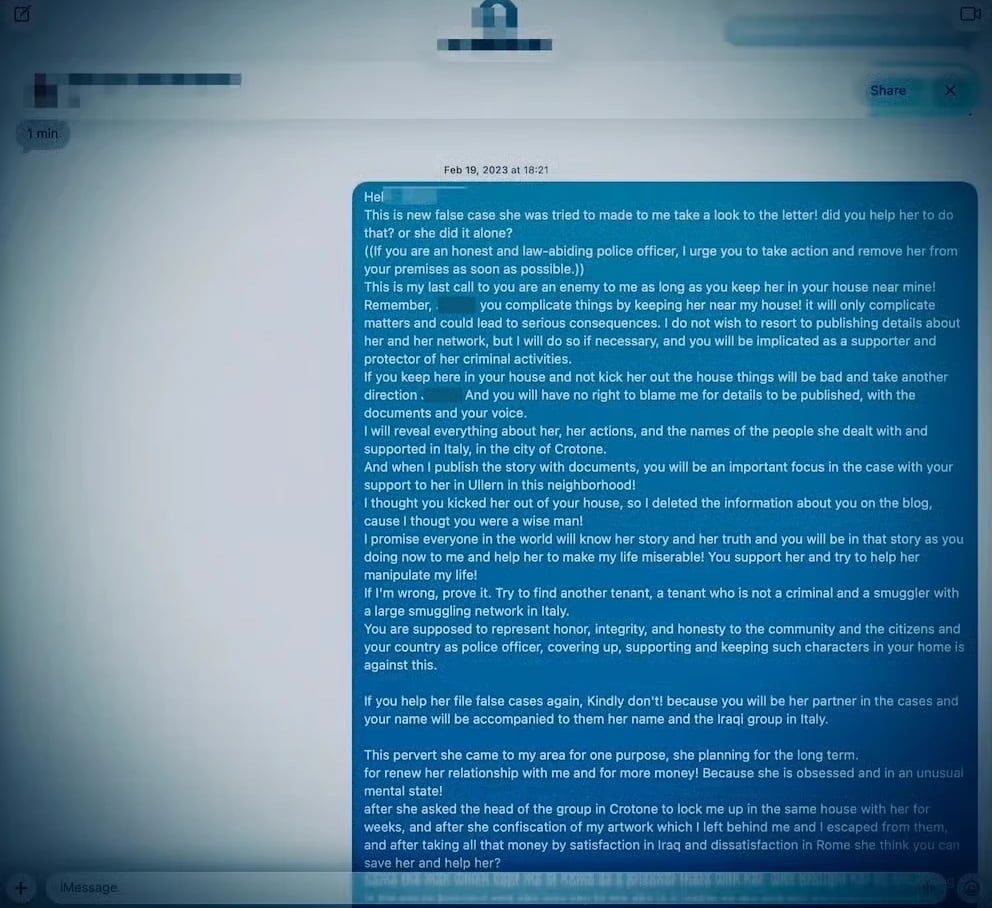
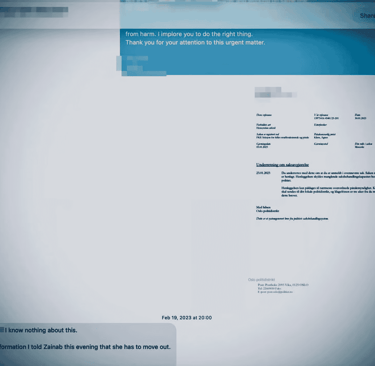
The correspondence indicates that the coordinator involved in the 2008 migrant facilitation operations sent a police officer to the victims’ residence in Oslo in 2022, after identifying one of their addresses following years of targeted surveillance. This action appears to have been intended to intimidate the victims, discourage them from reporting to the authorities, and pressure them to remove published information about the operations. The documents also confirm continued monitoring of the victims’ residences and the exploitation of connections within the Oslo Police to achieve objectives related to harassment and concealment. The data further suggest that the coordinator employed a police officer in a manner resembling organized-crime tactics.
In response, the police officer stated that he “knows nothing about the matter,” adding that he had instructed the individual concerned to leave the residence. However, subsequent information revealed that, after more than five months, the same individual was still residing in the officer’s home, raising questions about the accuracy of this statement and the nature of the relationship between the parties.
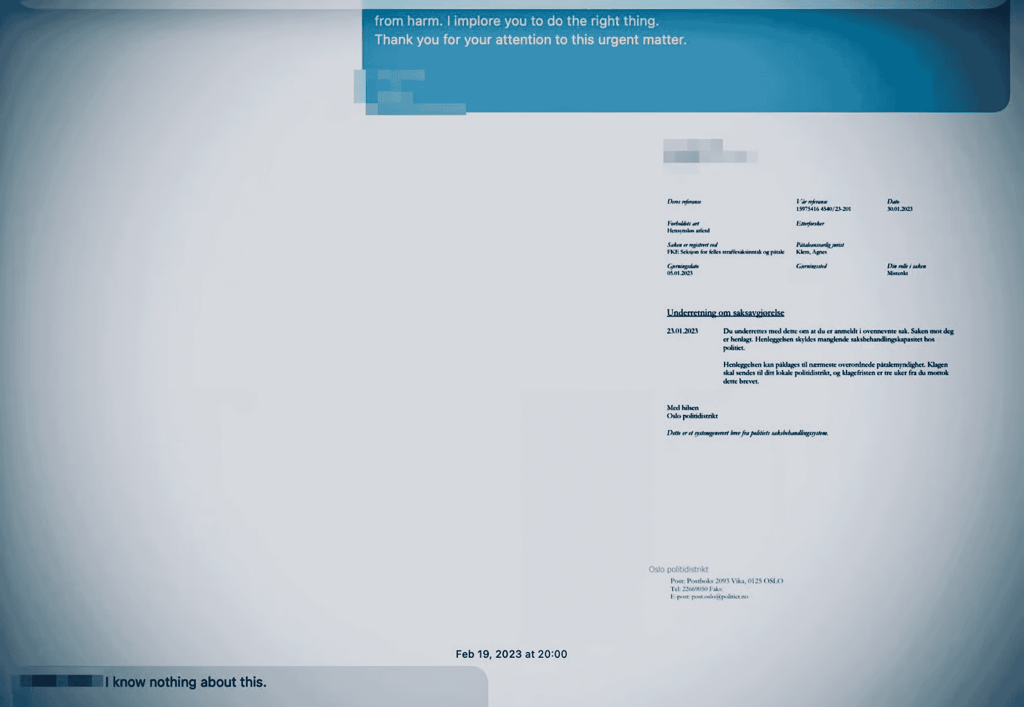
Information indicates that the police officer himself was among the victims of the network’s deception and cunning, as he was gradually manipulated and exploited to become a tool used against other victims without initially realizing it.
Since 2008, the Oslo Police have prepared more than 27 malicious, illegal, and unethical criminal cases on behalf of the coordinator, all of which were lost in court. This extraordinary situation highlights the role of certain police officers in protecting the network and assisting it in extortion through years of malicious prosecutions.
When the coordinator arrived at the victims’ address in Oslo in 2022, she launched a campaign of manipulation and provocation that escalated tensions within the local community and extended to certain police officers. This escalation went beyond social or verbal provocation and directly affected the behavior of some law enforcement personnel, who, according to documented reports, acted in ways contrary to the law and aligned with the coordinator’s objectives in support of the network.
These actions contributed to an atmosphere of chaos and mistrust within the Oslo Police, reflected in a series of malicious, illegal, and unethical cases against the victims, along with unprecedented internal disturbances, including reviews and investigations into the conduct of certain officers. This situation weakened the reputation of the affected police units in the capital and caused significant damage to perceptions of their effectiveness in handling sensitive cases.
Available evidence and testimonies indicate that the coordinator’s systematic use of provocation, deceit, and manipulation aimed to control narratives, silence victims, and destabilize the local environment. Records also reveal a repeated pattern of cunning and organized deception previously employed in other cities and countries, including Baghdad, demonstrating a remarkable ability to exploit official mechanisms within law enforcement and immigration systems.
During this period, attorney Samia Boulebtina presented misleading information to the court, claiming that the coordinator had arrived from Iraq instead of Italy, while portraying the victims as the ones who had stalked her, even though the events were not real. These statements influenced the course of the cases, enabling the coordinator to manipulate events and construct a deceptive narrative that presented her as a victim, with the restraining order against her being canceled.
Later, attorney Samia Boulebtina attempted again to mislead the Borgarting Court of Appeal, but this attempt also failed in 2024.
It is worth noting that the coordinator did not attend all the courts for the malicious cases prepared by the police to support these individuals, while the Oslo Police had prepared these cases in her favor, ultimately benefiting the network, as the victims continued to be pursued to their homes.
Between 2022 and 2023, the migrant facilitation operations carried out in 2008 were exposed through documented evidence, photographs, and official records, leading to an unprecedented crisis within the Oslo Police and causing institutional embarrassment that revealed professional weaknesses in some units and gaps in handling sensitive cases. The evidence was sent directly from Baghdad to the Norwegian Ministry of Justice and Public Security, providing official documentation of the incidents and further amplifying the legal and administrative repercussions of the case. In an attempt to contain the crisis, the Ministry requested that the victims grant the Oslo Police a second chance and encouraged them to revisit police stations to formally report the incidents and submit the evidence. Zainab Abdulkarim Ali
Despite the evidence being submitted to the Ministry and the ministry officials verbally acknowledging the seriousness of the information, the Oslo Police failed to conduct a serious investigation, closed the cases immediately with apparent confusion, and continued supporting members of the network until the summer of 2025, even as new documents revealed the coordinator’s role in organizing the facilitation of dozens of migrants from Iraq, Italy, and France, under the guise of fictitious opposition activities that deceived institutions and municipalities using meticulously crafted, deceptive, and misleading methods.
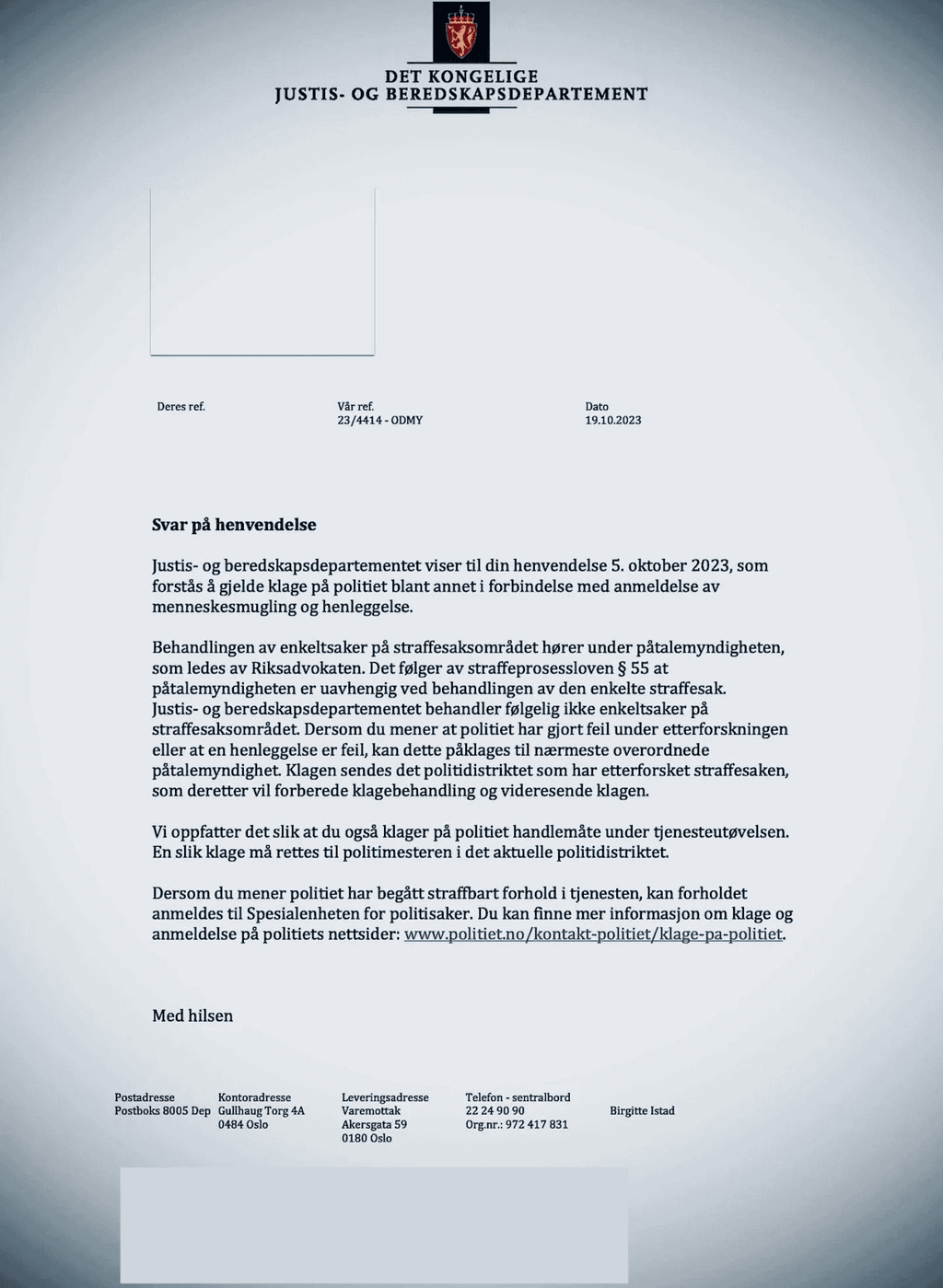
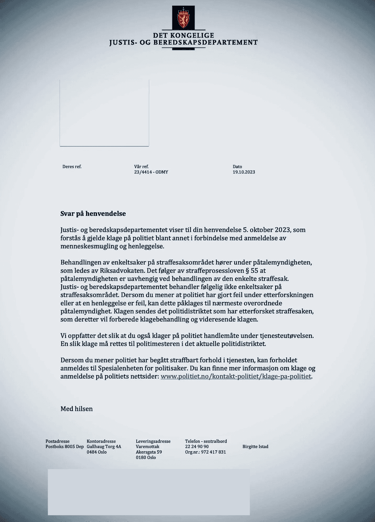
The Ministry of Justice and Public Security stated that individual cases fall under the jurisdiction of the Public Prosecution Authority, and that the ministry does not intervene in investigations or in the closure of criminal cases involving smugglers.
Official records show that the police in Fredrikstad and Oslo lost more than twenty seven malicious criminal cases between 2010 and 2025, most of which were initiated by individuals connected to networks involved in operations dating back to 2008.
The most notable cases include:
10991985/April 21, 2010
Fredrikstad Police Station (Zainab Abdulkarim Ali)
12903062 8470/14-3/June 4, 2014
Fredrikstad Police Station (Salah Hassan Al-Saadi, Qatranada Adnan Abdulhussein)
13020352 14128/14-3/HF1004/February 6, 2015
Fredrikstad Police Station (Salah Hassan Al-Saadi, Qatranada Adnan Abdulhussein)
13020352 14128/14-3/March 26, 2015
Fredrikstad Police Station (Salah Hassan Al-Saadi, Qatranada Adnan Abdulhussein)
15698618 16998/22-201 /June 2, 2022
Oslo Police Station (Zainab Abdulkarim Ali)
15708286 19483/22-201 /May 18, 2022
Oslo Police Station (Zainab Abdulkarim Ali)
15802498 43401/22-201/August 3, 2022
Oslo Police Station (Zainab Abdulkarim Ali)
15975416 4540/23-201 /January 30, 2023
Oslo Police Station (Zainab Abdulkarim Ali)
16005870 12669/23-201 /March 20, 2023
Oslo Police Station (Zainab Abdulkarim Ali)
16152651 50102/23-201 /August 14, 2023
Oslo Police Station (Zainab Abdulkarim Ali)
16190351 60002/23-201 /November 29, 2023
Oslo Police Station (Zainab Abdulkarim Ali)
13469719 734/23-123/January 17, 2024
Oslo Police Station (Zainab Abdulkarim Ali)
16152651 374/24-115/JSM005/January 30, 2024
Oslo Police Station (Zainab Abdulkarim Ali)
…and many additional cases filed between 2010 and 2026 at Fredrikstad and Oslo Police Stations involving the same individuals.
This series of cases reveals a repeated pattern of retaliatory and fabricated reports prepared by the Oslo Police, often used as tools of extortion or personal gain. It raises important questions about the integrity and oversight of certain procedural practices within the police force, and how external pressure and bias may have affected the neutrality of official actions.
From an institutional perspective within Oslo Police, these cases underscore the need to strengthen accountability, not by questioning the independence of the judiciary which consistently rejected these malicious allegations despite the police attorneys’ attempts to persuade the court to rule unjustly against the victims but by highlighting how police and administrative mechanisms can be influenced in ways that undermine professional integrity, equal treatment under the law, and public confidence in the police.
After the forced displacement of the victims from Oslo under the influence of human trafficking networks, a report was filed against the traffickers to the Western Norway Police, who initially treated the case seriously. However, upon forwarding the case to the Oslo Police, it was immediately closed, with claims that the court had advised the victim not to pressure the traffickers. Documents and evidence reveal that this contradicts reality: over more than a decade, the traffickers actively pursued the victims and even moved to live near their homes, while certain police officers were manipulated or exploited to exert pressure on the victims.
Official records show that the Oslo Police prepared more than 20 separate legal cases between 2014 and 2025 in favor of the traffickers, all of which were dismissed by the courts due to compelling evidence contradicting the false claims submitted by police attorneys in Oslo and Fredrikstad. The last case, dated January 2, 2025, was initially closed by the police because it was based on unethical and fabricated statements in favor of the 2008 trafficking coordinator. Nevertheless, the police sent the case to the court. Victim testimonies and documented confessions confirmed the coordinator’s connections with mafia elements in Italy and highlighted her retaliatory actions.
Even in the face of these facts, the Oslo Police sought a weak pretext to close the case after it had been handled by honest police officers from another region of Norway, reflecting a recurring pattern of criminal networks receiving protection and support through manipulation of certain law enforcement channels. These actions illustrate the significant challenges victims face in defending their rights and obtaining justice, as organized networks repeatedly exploited governmental institutions to shield themselves while exerting pressure and intimidation on their targets.
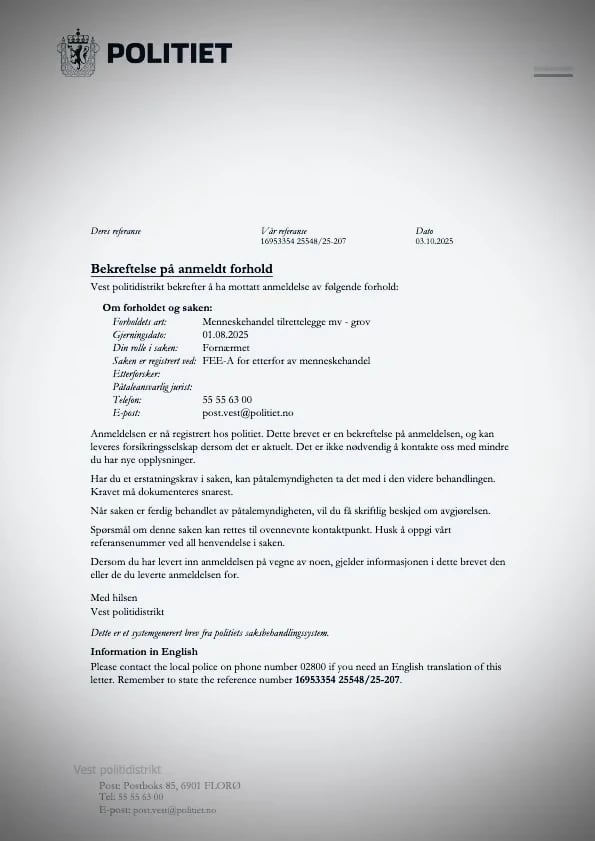
Translation
Their Reference:
Our Reference: 16953354 25548/25-207
Date: 03.10.2025
Confirmation of Reported Incident
The West Police District hereby confirms the receipt of a report regarding the following matter:
Nature of the incident and case:
Type of offense: Human trafficking – facilitation, aggravated
Date of offense: 01.08.2025
Your role in the case: Victim
Case registered with: FEE-A for investigation of human trafficking
Investigator: [Name not provided]
Prosecutor in charge: [Name not provided]
Contact Information:
Telephone: 55 55 63 00
Email: post.vest@politiet.no
The report has now been officially registered with the police. This letter serves as formal confirmation of your report and may be submitted to your insurance company, if relevant. There is no need to contact us unless you have new information.
If you have a claim for compensation in this matter, the prosecution may consider it during further proceedings. The claim must be documented as soon as possible.
Once the case has been concluded by the prosecution, you will receive written notification of the decision.
Questions regarding this case may be directed to the above contact point. Please ensure that you reference our case number in all correspondence concerning this matter.
If you submitted the report on behalf of someone else, the information in this letter applies to the individual(s) for whom the report was filed.
Sincerely,
West Police District
This is a system-generated letter from the police case management system.
Information in English:
Please contact the local police at phone number 02800 if you require an English translation of this letter. Remember to state the reference number 16953354 25548/25-207.
It should be noted that the West Police District treated this case with full seriousness, as did the Ministry of Justice and Public Security in 2023 when they acknowledged the gravity of the information regarding the network. In contrast, the Oslo Police have consistently blocked and prematurely closed the case, preventing any attempts or procedures to investigate it, despite the abundance of indisputable evidence, witness testimonies, photographs, and official documents demonstrating the network’s involvement in migrant facilitation. This situation indicates that the network received strong protection from certain members of the Oslo Police, reflecting a serious breach in the administration of justice and the rule of law within the police force.
The reopening of the traffickers’ file, along with the 2008 migrant facilitation operations, supported by indisputable evidence and reliable witness testimonies, may uncover truths that have long remained hidden, alongside more than twenty-seven malicious and unethical criminal cases systematically fabricated in clear violation of legal and ethical principles.
Whether these actions resulted from deliberate intent or gross negligence, they reveal a blatant breach of legal and ethical duty by certain individuals within the Oslo and Fredrikstad police forces, who strayed from their oath to uphold truth and justice, substituting the protection of genuine facts with the service of wrongful interests at the expense of the victims and the law.
Explanatory Note Regarding the Case Dismissal by the Oslo Police:
The Oslo Police stated in their decision that the legal basis for dismissing the case was the lack of reasonable grounds to investigate the commission of a criminal offense subject to public prosecution, in accordance with Section 224 of the Criminal Procedure Act.
However, a closer examination of the factual context reveals a striking contradiction between the formal legal justification and the practical realities. After the trafficker coordinator settled near the victim in the residence of a police officer, more than twenty malicious criminal cases were filed against the victim at the direct request of the coordinator, based on lies that were exposed to the court from the outset. All of these cases were unethical and were ultimately lost by both the police and the coordinator.
These facts reveal a clear double standard in the application of legal principles: the system found no legal obstacle to issuing malicious cases against the victim, while the original case reflecting actual violations by a migrant facilitation network was dismissed. This represents a stark example of how laws and official procedures can be exploited to serve illicit interests.
In this context, it becomes evident that those who dared to expose corruption within the police and the facilitation network became the accused, while the actual perpetrators remained beyond legal accountability, representing one of the most troubling paradoxes in modern Oslo history.
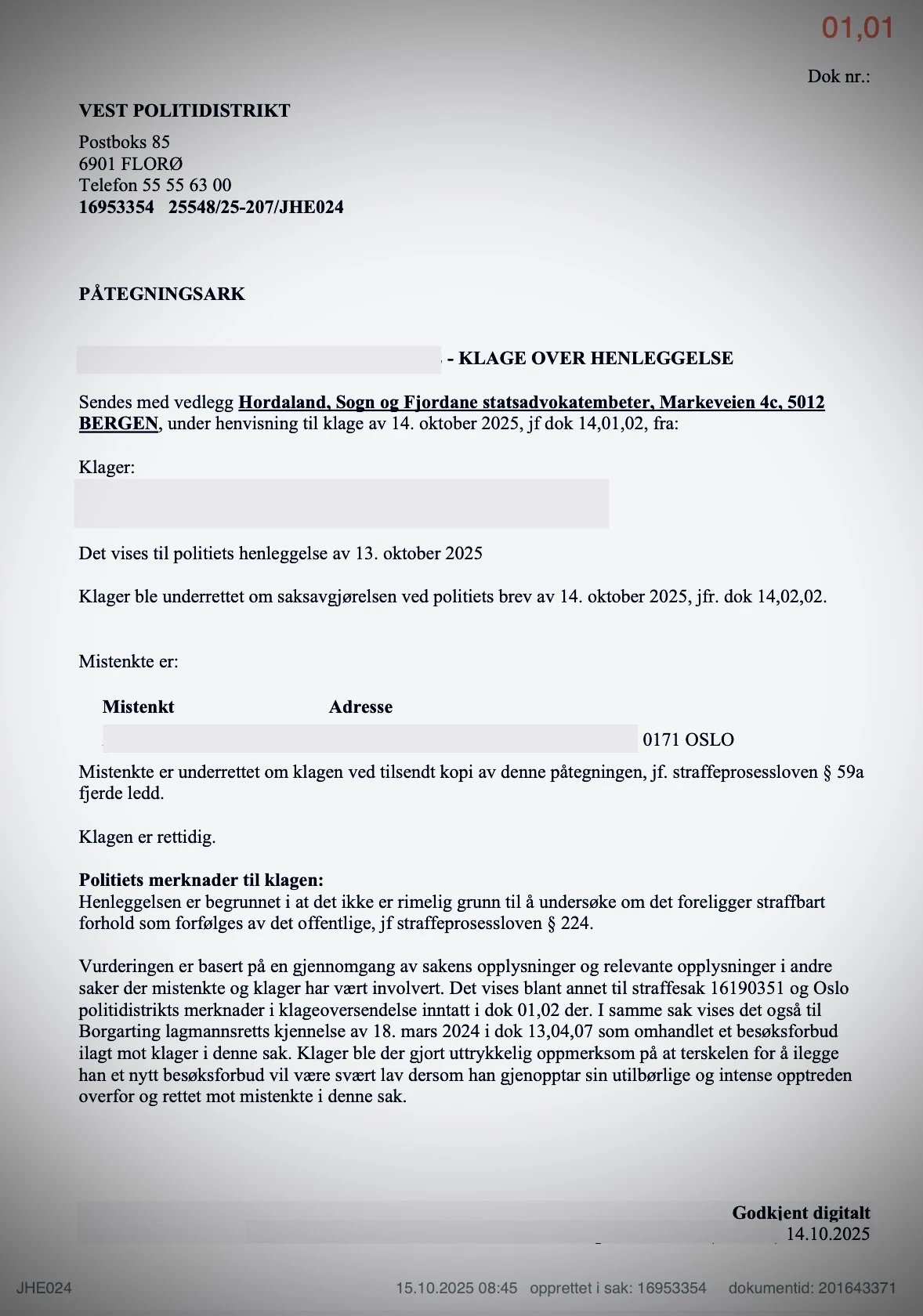
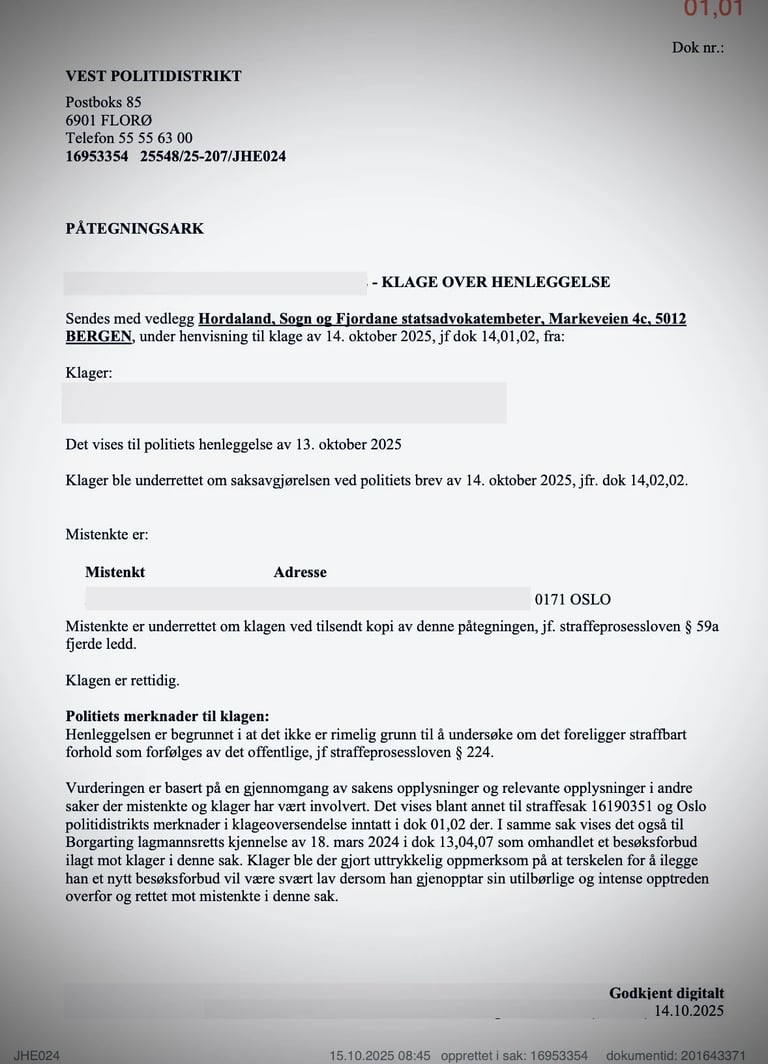
Judicial Clarification on a Stalking Case and Oslo Police Complicity
Zainab Abdulkarim, Iraq, Oslo, Norway، Visual Art, gallery, exhibition, Zainab Art, Whispering Dialogue
On January 2, 2025, at 10:00 AM, the court in Oslo held the final session in a long series of cases involving the complicity of certain Oslo Police officers in favor of a migrant facilitation network. During the session, the Oslo Police attempted to impose a visit ban / restraining order against the real victims, seeking to portray the trafficking operations coordinator, who had never appeared in court, as the “victim.”
The court concluded that there was no legal basis for imposing such an order and emphasized that a visit ban / restraining order would not appropriately address the situation.
Court Assessment and Facts:
The Oslo Police argued that the victims’ actions were “burdensome” to the coordinator, referring to their documentation of her repeated presence near their homes. The court acknowledged this behavior but determined that it did not constitute sufficient grounds under Section 222a of the Criminal Procedure Act to impose a visit ban / restraining order. Zainab Abdulkarim Ali
The case revealed attempts by the Oslo Police to reverse the roles of victims and perpetrators, portraying the traffickers as victims while treating the real victims as defendants. Despite dozens of prior court decisions rejecting attempts to grant the coordinator legal victim status, the Oslo Police selectively cited legal paragraphs and previous failed attempts by police lawyers as pretexts to close cases in favor of the traffickers, blatantly disregarding official evidence and facts.
The coordinator had previously been responsible for detaining the victims in southern Italy, in the city of Crotone, seizing their funds, and confiscating their artwork, while the victims were pursued and harassed for years in Norway. The victims’ documentation of her repeated presence near their homes was a natural and necessary response, yet the Oslo Police considered it “improper and dangerous” and used it to file more than 27 vexatious and unethical cases to pressure the courts.
Attempts to Protect the Victims vs. Police Corruption:
The real victims sought court protection against corruption and conspiracies involving certain Oslo Police officers, providing detailed testimonies against the coordinator. However, the police ignored overwhelming evidence and prior court rulings, closing cases in favor of the traffickers while leaving the victims unprotected. This selective application of the law highlights a system manipulated to serve the interests of perpetrators at the expense of justice and facts.
Conclusion:
The court confirmed that there was no legal basis to impose a visit ban / restraining order against the victims, representing a clear defeat for the Oslo Police in their last unethical case in 2025 within the city.
The persistence of the Oslo Police and the network in pursuing this order aimed to grant the traffickers legal victim status instead of recognizing them as perpetrators, despite their involvement in smuggling dozens of migrants to Schengen countries. This case serves as a striking example of systemic complicity within certain elements of the Oslo Police, demonstrating how laws can be manipulated for personal gain and favoritism, while the real victims remain exposed and unprotected.
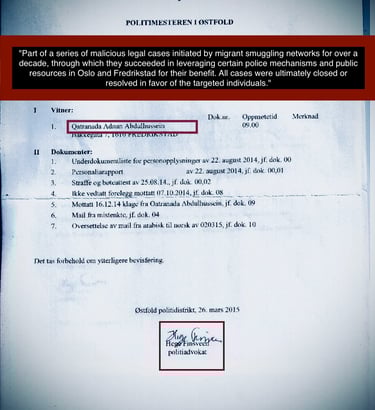
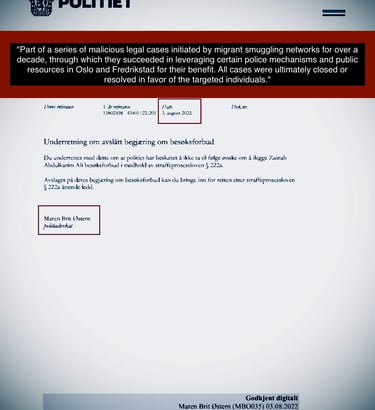
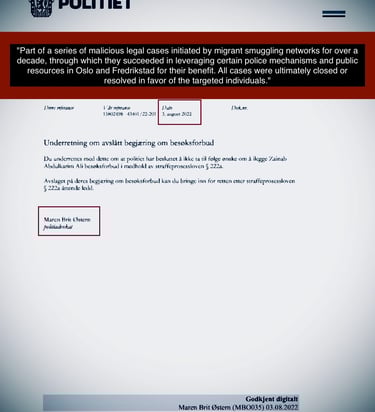
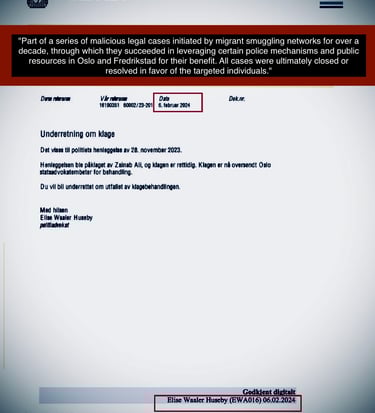
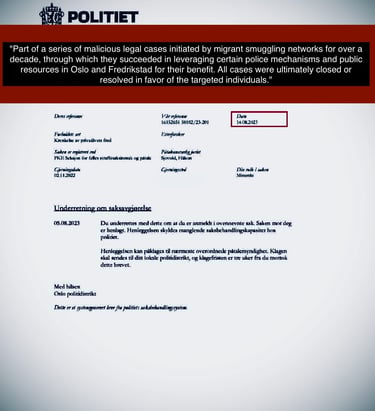
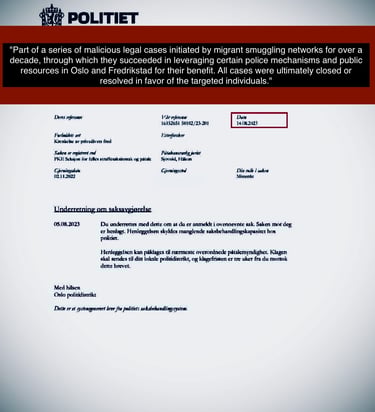
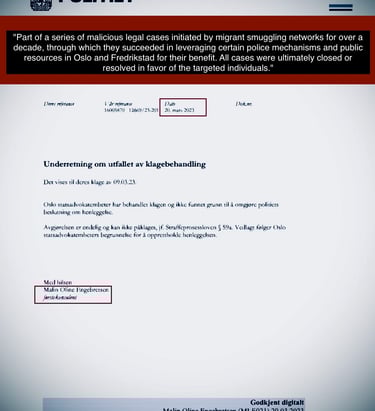
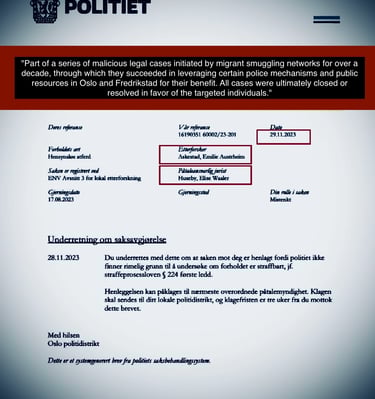
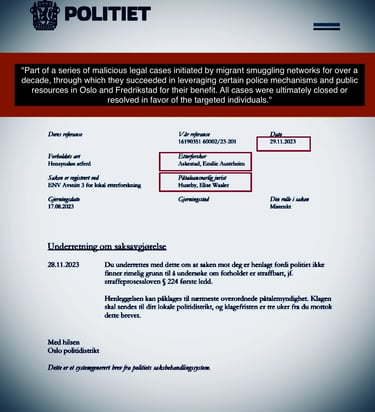
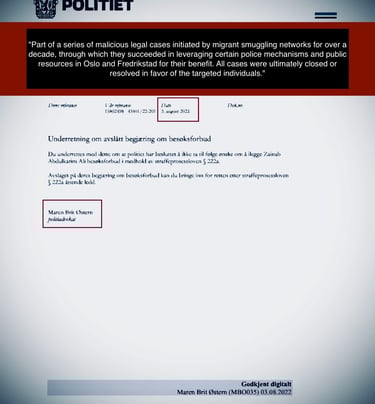
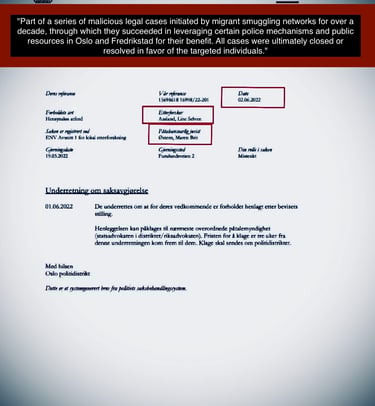
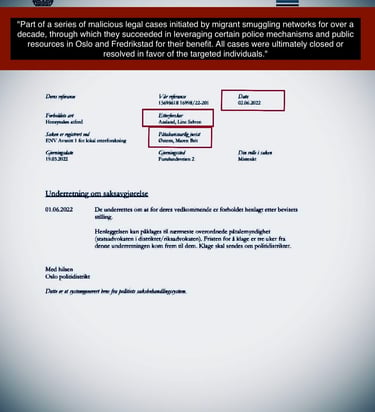
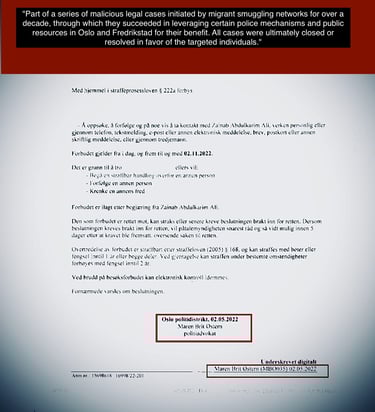
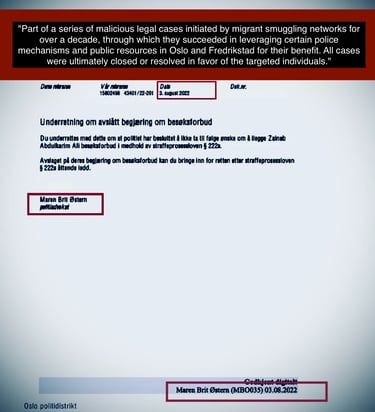
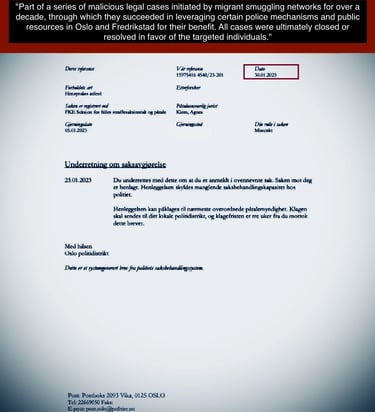
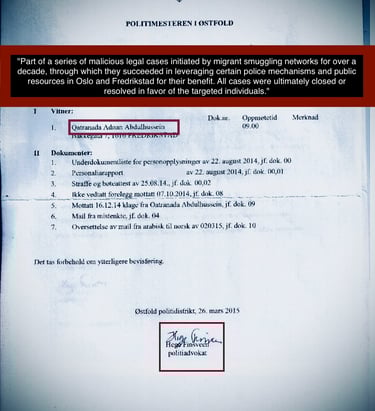
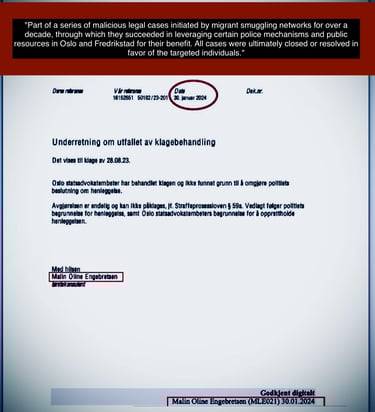
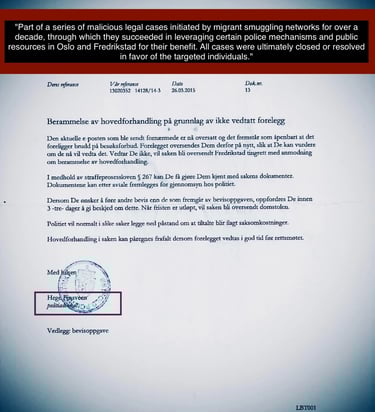
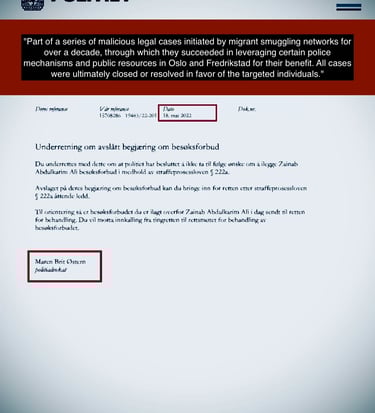
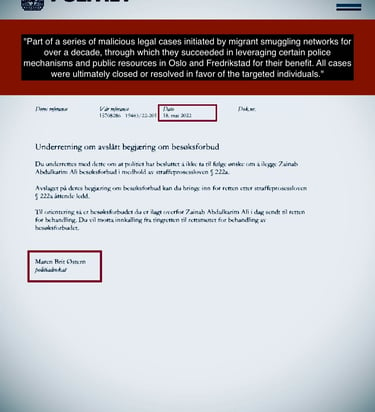
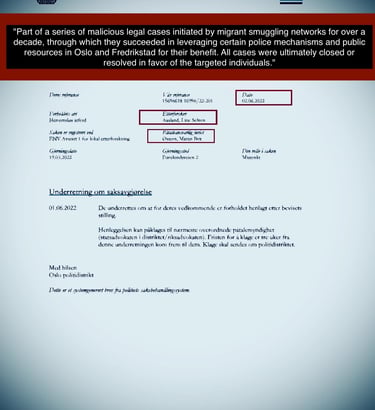
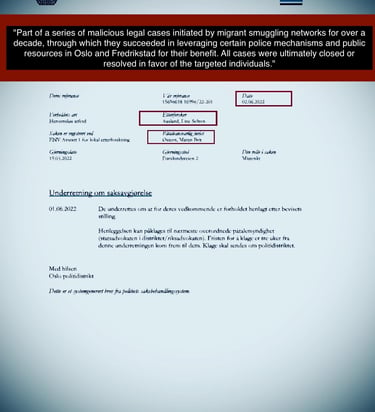
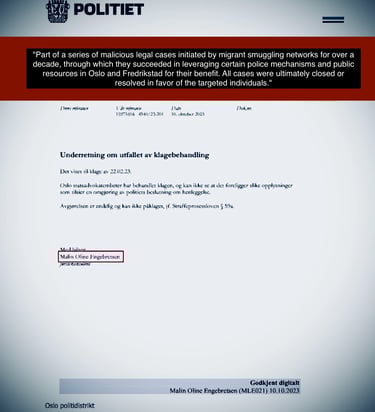
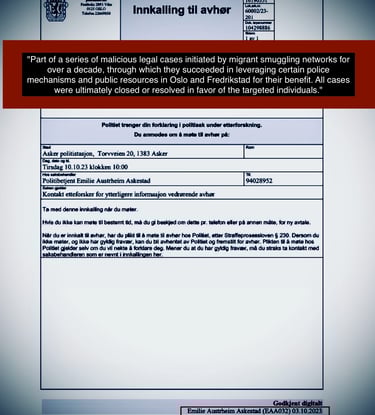
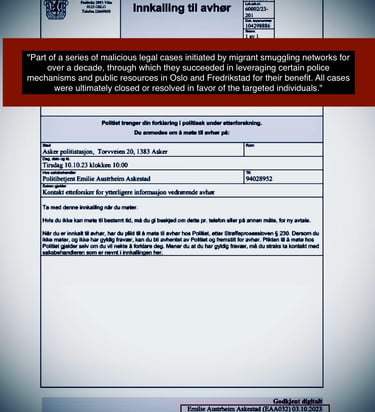
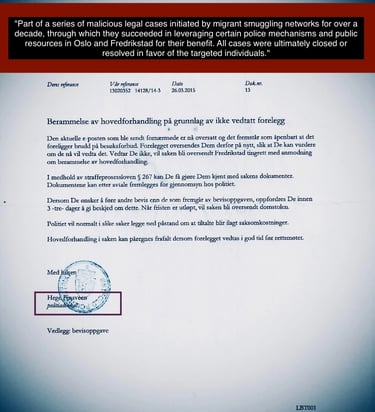
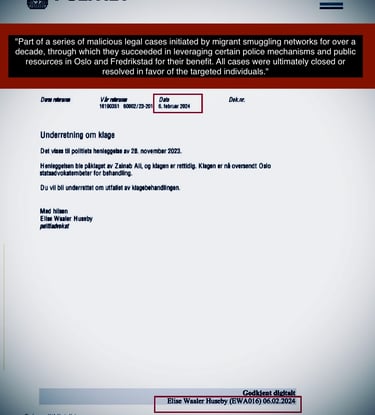
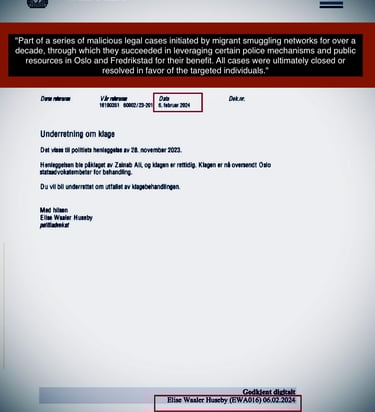
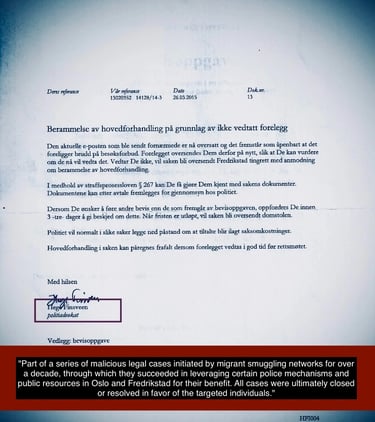
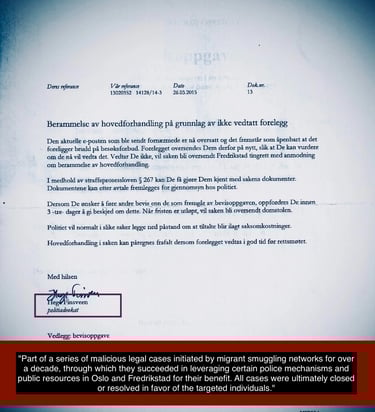
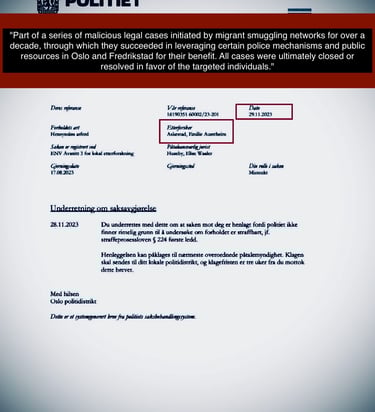
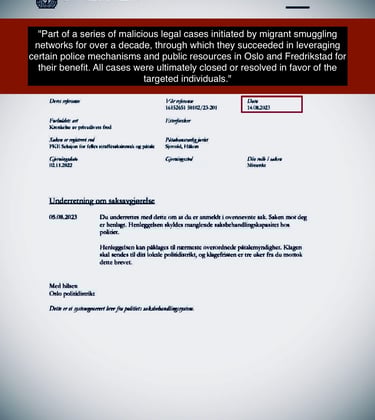
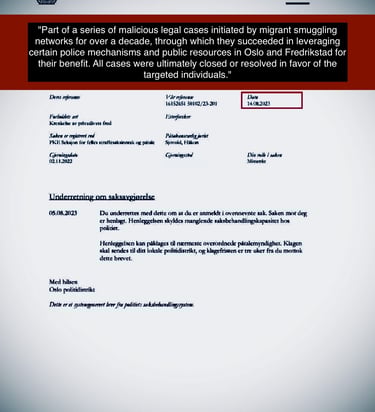
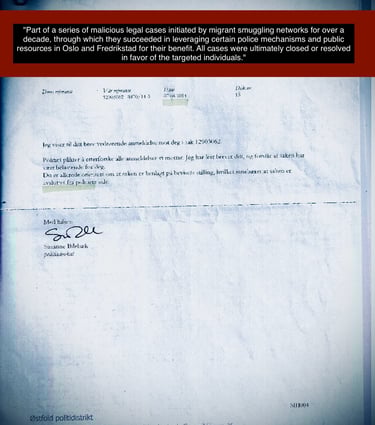
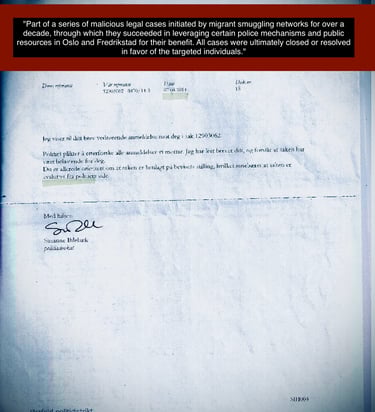
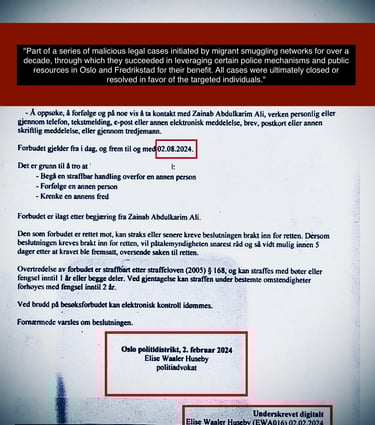
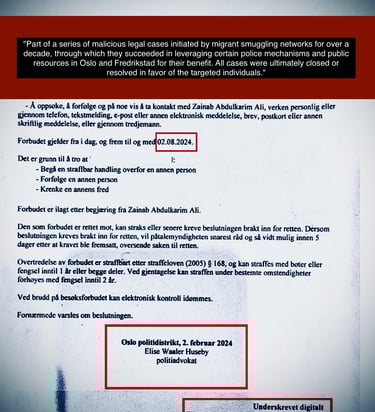
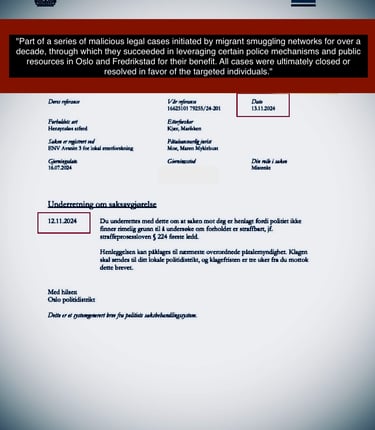
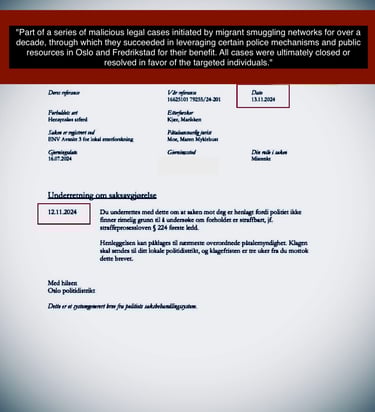
Unethical Legal Pursuits: Institutional Failures in Oslo and Fredrikstad (January 2010– January 2026)
The unethical legal pursuits involved the exploitation of police authority by individuals engaged in facilitating the movement of migrants to Schengen countries in 2008, followed by more than a decade of manipulation within the police legal system in Fredrikstad and Oslo (2010–2025). Some of these actions were carried out by individuals holding police badge numbers such as EWA016, EAA032, MB0035, and MMM011, among others, whose institutional performance revealed repeated procedural errors and a limited understanding of the responsibilities entrusted to them. This case illustrates the gap between the authority granted to these officers and the ethical obligations expected of them, highlighting how the absence of legal accountability and effective oversight allowed official power to be used to protect perpetrators and pressure victims, despite clear evidence, witness testimonies, and official documentation.
The case of Erik Jensen indicates that corruption within the Oslo Police was not an isolated incident but part of a broader institutional pattern, where personal loyalty to colleagues and superiors sometimes outweighed strict adherence to law and procedural standards. Official reports, including the Norwegian Police Directorate Committee report and the Scandinavian Research Council for Criminology report at the University of Oslo (2021), document how ethical considerations were inconsistently applied and effective investigative measures were not taken, allowing misconduct and abuse of power to persist for decades.
🔗[PDF link of the committee report and conference, 2021]
Notably, the report ‘Corruption and Unethical Conduct in the Nordic Police Forces’ was removed from the Nordic Research Council for Criminology’s website shortly after circulation. Its disappearance raises questions about how the Oslo Police handle criticism and transparency.


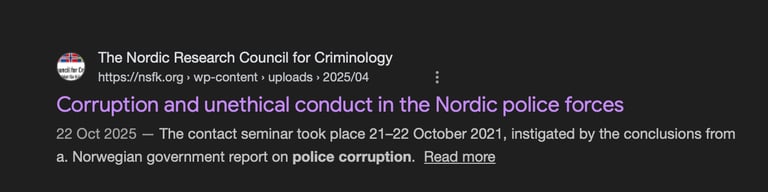
In a courageous move, the The Nordic Research Council for Criminology decided to republish the report Corruption and Unethical Conduct in the Nordic Police Forces as a separate file on its official website on October 22, 2025, noting that its content is based on a seminar held on October 21–22, 2021.
Prior to this, the report had been republished on independent platforms such as forbiddenfileshub.com and filessos.com to ensure it remained accessible to the public after it was removed and access to the information was restricted.
However, some links and references within the report remain unavailable or restricted, due to restrictions imposed by the Oslo Police to limit public access to the information.
Oslo Police and Human Trafficking: Structural Gaps and Accountability Challenges
Independent international assessments have highlighted persistent challenges in how the Oslo Police handle human trafficking cases. According to the GRETA report by the Council of Europe, early identification of victims is often ineffective, and a significant proportion of cases do not progress to convictions, reflecting weaknesses in case classification, investigative procedures, and the ability to achieve tangible outcomes (GRETA Report).
Similarly, the U.S. Department of State Trafficking in Persons Report 2023 (TIP 2023) notes that many cases of labor exploitation in major cities are treated as minor violations rather than formally recorded as trafficking crimes. This approach limits victims’ legal protections and does not accurately reflect the scope of trafficking activities (TIP Report 2023).
The UNHCR has also reported that early signs of exploitation among refugees and migrants often go unnoticed, leaving vulnerable populations exposed to potential traffickers ([UNHCR Warnings]).
Administrative Gaps and Data Misuse in Oslo Police
The Spesialenheten 2023 Annual Report reveals that a large number of complaints against Oslo Police officers were dismissed without criminal investigation, with approximately 65% of cases categorized as “no reasonable grounds for investigation.” This indicates that many complaints do not lead to prosecution, limiting accountability (Spesialenheten 2023 PDF).
The report also documents instances of unauthorized access to police databases, where officers reviewed records without an official reason. Some cases resulted in administrative measures or fines, highlighting a gap between administrative oversight and criminal accountability (Spesialenheten Reports).
Institutional Gaps and Anti Corruption Challenges
According to the OECD Anti-Corruption & Integrity Outlook 2024, Norway lacks a comprehensive national anti corruption strategy, and there is a gap between existing legal frameworks and their practical enforcement. These gaps may leave certain risks unaddressed and contribute to inconsistent accountability within the police force (OECD Report 2024).
Journalistic reporting, such as the VG report (June 2025), also highlights instances of institutional discrimination in security clearance procedures, disproportionately affecting individuals from ethnic or immigrant backgrounds and eroding public trust in the integrity of Oslo Police (VG Norway).
Context of Vexatious Cases 2010-2025
Between 2010 and 2025, Oslo and Fredrikstad witnessed a series of vexatious cases against actual victims of human smuggling operations. These cases were often initiated based on inaccurate claims by coordinators of smuggling activities and relied on false or exaggerated allegations. Evidence and official documentation were available, but many cases were closed prematurely, reflecting selective application of legal authority.
This period illustrates how the absence of effective oversight allowed elements within the police to protect perpetrators while legal harassment was directed at victims, highlighting a structural tension between institutional authority and ethical obligations.
Conclusion
The evidence and international reports indicate that the challenges within the Oslo Police are not merely individual failures but multi-layered institutional phenomena: difficulties in early victim identification, limited legal accountability, administrative gaps, and practices that may protect offenders at the expense of victims. Between 2010 and 2025, the series of vexatious cases demonstrates how official authority can be exploited in the absence of rigorous oversight, weakening public trust and raising questions about the integrity of law enforcement in Oslo.
Crucially, these cases put justice itself to a practical test: when investigative powers intersect with non-neutral interests, safeguarding documented facts and evidence becomes the sole line of defense for victims. In this context, reform is not just a matter of adjusting procedures or legislation but requires realigning police priorities toward victim protection and holding accountable those who use their positions to mislead the law.
The Oslo experience underscores that institutional accountability and effective oversight are not optional they are essential to maintain public confidence in the law, and any gap leaves the door open for the misuse of authority at the expense of the vulnerable.
Documented event in Oslo, Norway
FilesSOSZainab Abdulkarim